What Makes Brands Stand Out Beyond Campaigns?
How audiences engage with content across social and digital platforms is reshaping how brands are noticed, with humour, personality and cultural relevance playing a growing role in holding attention over time.
Audience attention has become harder to secure and is increasingly shaped by how people engage with content across social and digital platforms. Campaigns still have their place, particularly for launches, key announcements and structured messaging, but they sit alongside other forms of brand communication that help shape perception over time.
What is becoming more influential is how brands show up day to day across social, news and digital platforms. Audiences are more likely to engage with content that feels natural within those spaces, rather than messaging that feels separated out as a formal campaign.
Winning Attention in Everyday Feeds
What drives performance across social and digital platforms is relevance in the moment. Content that is lighter in tone, culturally aware and less rigidly tied to product messaging often cuts through more effectively. It sits alongside campaigns rather than existing as something separate, making it easier to engage with.
Humour and personality play a role, but the value lies in reducing the distance between brand and audience. When content feels more natural and informal, it is more easily recognised and remembered.
Different Approaches, Same Objective
There is no single approach to creating this kind of content. Different brands apply it in ways that suit their audience, sector and intent.
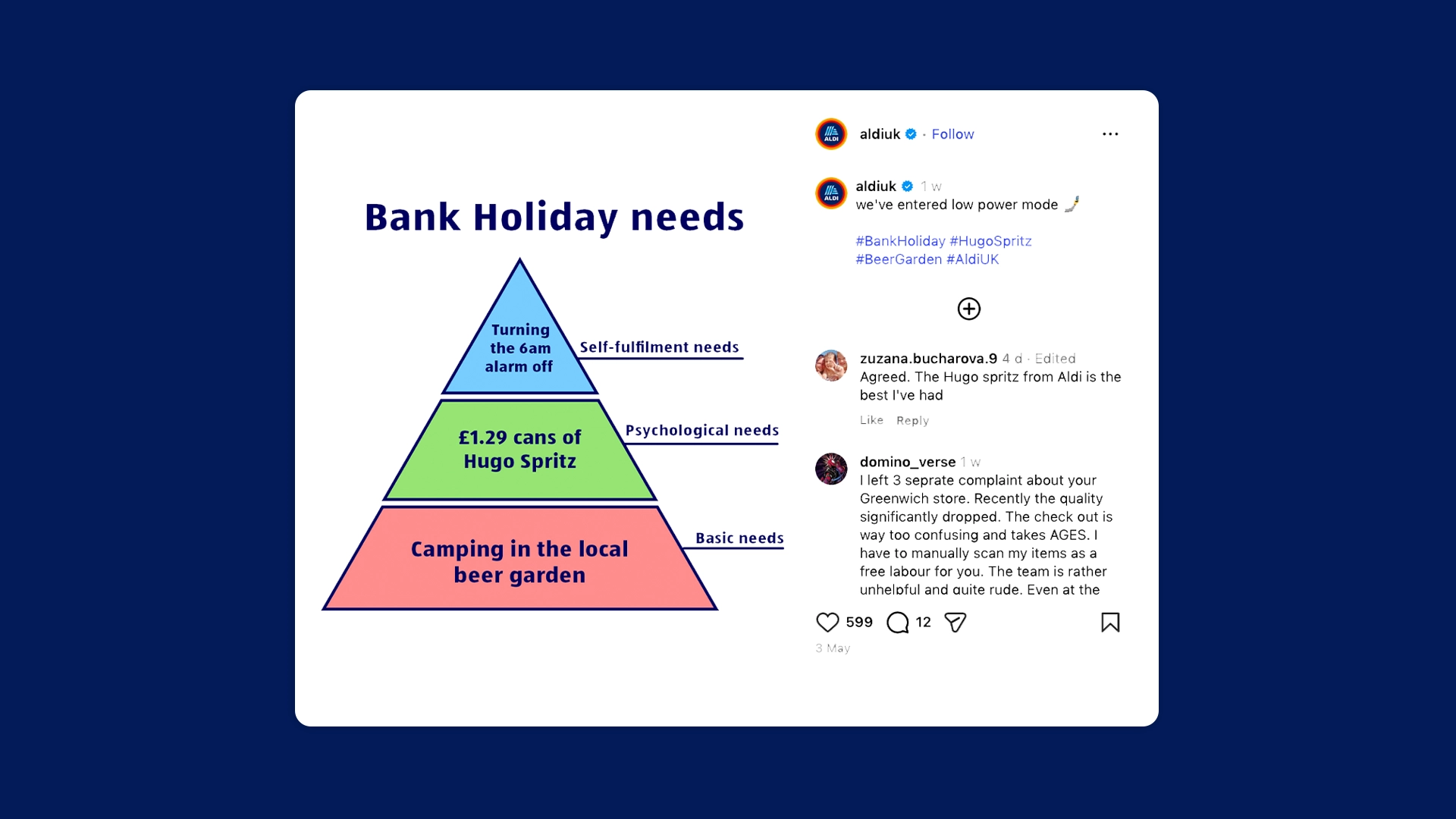
In some cases, this takes the form of humour and tapping into cultural moments, particularly where brands are competing for attention in highly saturated feeds. For example, Aldi’s marketing director has openly acknowledged using more playful, humour-led content across social platforms as part of a wider shift towards more culturally relevant communication. This has moved Aldi’s strategy away from highly branded, purely product-focused posts in favour of content that is designed to engage audiences in a more natural way.
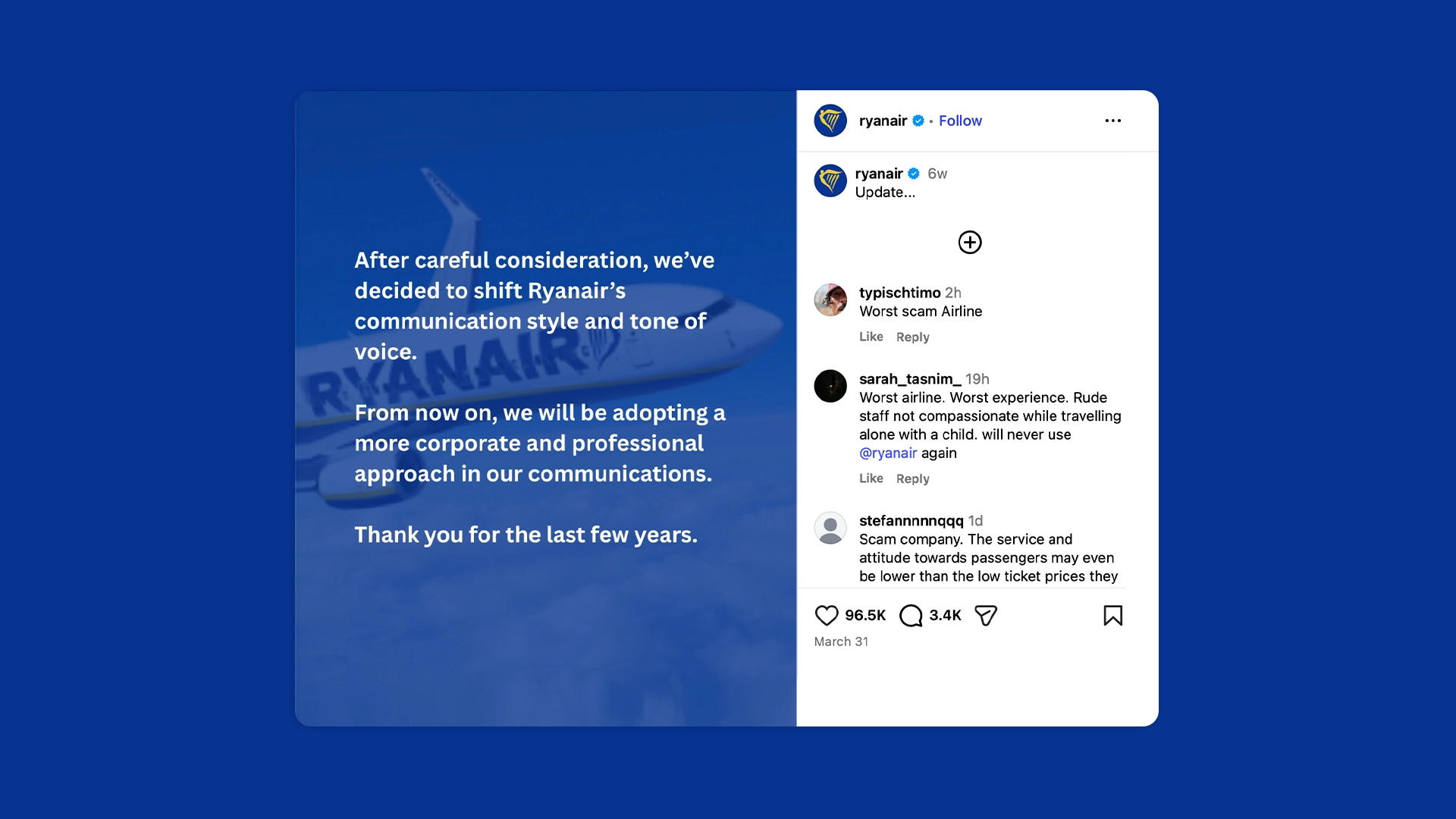
Ryanair demonstrates how tone itself becomes part of a brand’s identity. The airline has built a highly distinctive social presence based on humour, self-awareness and a deliberately irreverent tone, which has become a core part of how audiences recognise and engage with the brand.
In a recent April Fools’ post, Ryanair joked about shifting to a more corporate and professional tone of voice. The reaction highlighted just how closely its audience associates the brand with its existing approach and how integral that tone has become to its identity.
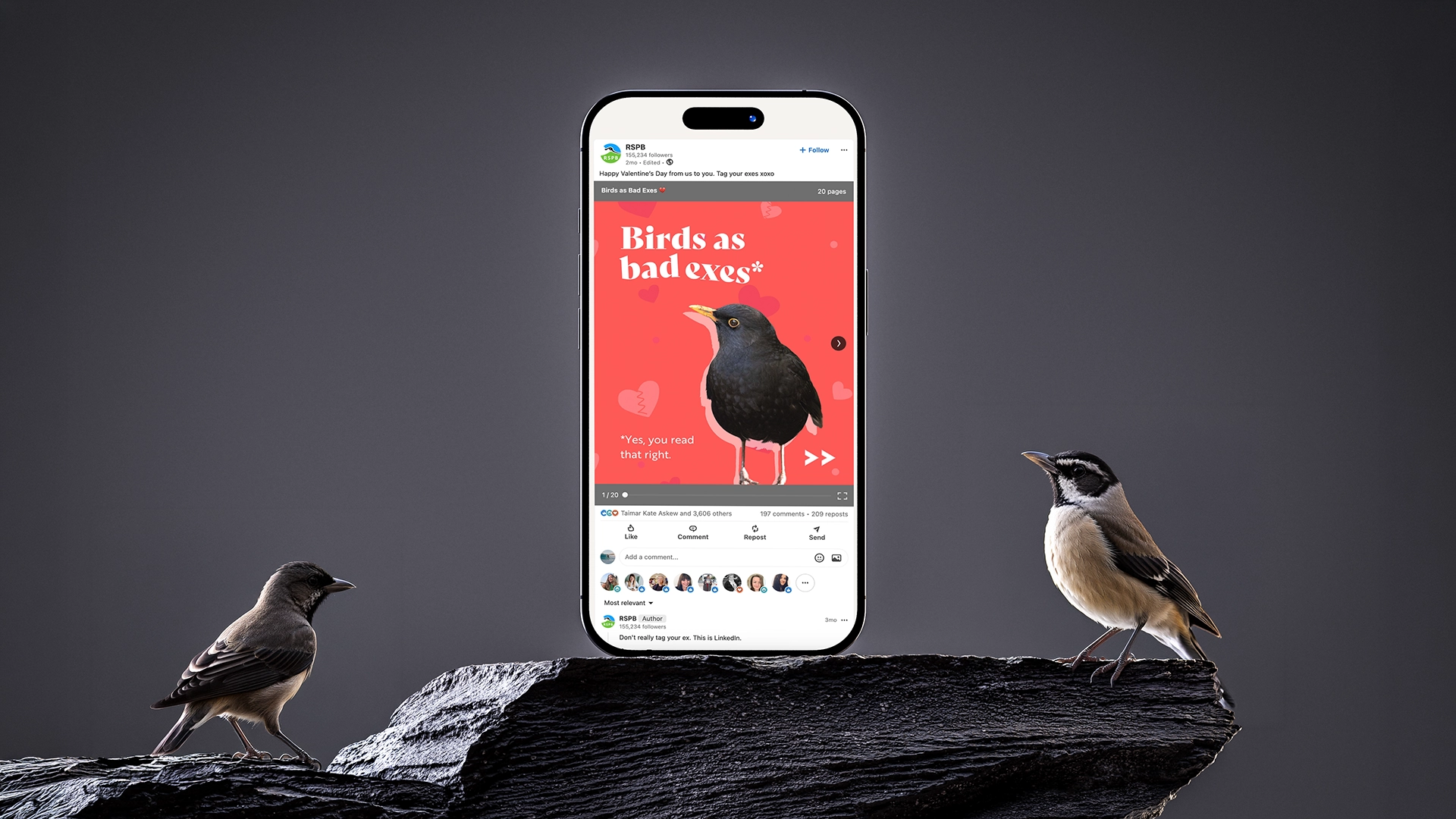
RSPB takes a similarly personality-led approach, using humour and socially native content formats to make conservation messaging feel fun and engaging. Posts built around concepts like ‘Different birds as tourists’ and ‘Rating owls on their politeness’ show how even organisations with serious objectives are adapting tone and format to suit more informal styles of communication, including on LinkedIn, where brand content is typically still more formal and corporate.
What links these approaches is intent.
Each brand is responding to audience behaviour, with emphasis shifting depending on context, platform and message.

Perception Forms Over Time
Perception forms through repeated exposure across different platforms, where brands are encountered in multiple small interactions.
In that environment, communication that feels overly structured or internally focused can struggle to land. Not because it lacks value, but because lighter, more natural content often feels more personal and closer to the content people see from individuals rather than organisations.
Showing Up Consistently
In practice, brands operate across multiple touchpoints over time, with effectiveness shaped by how communication is received and interpreted, rather than visibility alone.
As attention continually fragments across platforms and formats, the brands that stand out are those that maintain relevance across both campaigns and ongoing interactions, where community-building is continually reinforced.

What This Means for Businesses
The key consideration for businesses is ensuring that different types of communication feel coherent when experienced together. Campaigns, always-on content and reactive posts are often created in parallel, but it’s important to remember that audiences experience them as a single continuous presence.
That means thinking about how tone, responsiveness and relevance hold together across everything you are publishing, not just planned campaigns.
If your business is looking to build content that connects across both campaigns and ongoing activity, we can help. Get in touch today to find out more.
Get in touch
We’d love to chat!
Selected Works